

AIM fire lands in the courts
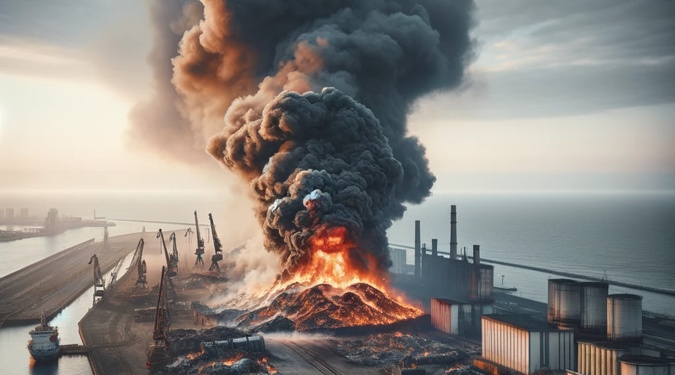
It started small enough, that fateful fire at the American Iron and Metal (AIM) recycling plant at Port Saint John in the early-morning hours on Sept. 14.
But within 15 minutes, it quickly escalated into a major blaze. Feeding off a massive pile of shredded vehicles from which it sprung, it grew to become the worst fire this city had seen in recent history.
It burned for more than 40 hours, sending plumes of toxic smoke, soot and ash into the air and was only extinguished in that time thanks to the Atlantic Osprey, a tug supply vessel that was in port and doused some 17 million gallons of water on the fire.
In the aftermath, amid widespread concern in the city about the fire and the aftereffects, there was a flurry of government response – the first being the formation of a task force empanelled with leaders from government and Port Saint John.
As a result of that response and, more recently, the final report from the task force, the government has taken a number of actions, and not just at the AIM facility at the port but at 87 scrap yards across New Brunswick.
The Fire Marshal’s Office issued compliance orders against 10 sites, including three operated by AIM in Moncton, Fredericton, and a second site in Saint John.
In response to the orders to comply with the national fire code, AIM has turned to the courts asking for a judicial review of the orders.
The Fire Marshal's orders represent a facet of public law known as administrative law. Administrative law is omnipresent due to the extensive and often integral role of government in society.
In New Brunswick, the government's regulatory reach means that specialized procedures are in place for challenging decisions made by government agencies, including the Fire Marshal.
The Rules of Court detail these procedures, requiring, among other things, that any legal action against a government agency be initiated promptly – within 90 days. This action sets in motion a process where a justice on the Court of King's Bench is authorized to "review" the governmental agency’s action, giving life to the concept of a judicial review.
New Brunswick has become a notable arena for judicial review cases, contributing many landmark decisions that have shaped legal principles.
These principles guide how courts consider applications for judicial review. Depending on the application of these principles, governmental decisions can be overturned, modified, or upheld.
In the meantime, the provincial government has also revoked AIM’s salvage licence at its site at the port and suspended its approval to operate.
As the company navigates the legal challenges against the government's decisions, the legal and community implications may be significant.
The challenges not only underscore the dynamic between industry and regulatory bodies but also highlights the vital role of judicial review in maintaining a balance between governmental action and the rights of businesses, the community and individuals.
In the unfolding story of AIM, the outcomes of current and potential future judicial review applications will be of particular interest – not just to the legal community but the public at large.
PHOTO CAPTION: An AI-generated image illustrating a blaze similar to the AIM fire at Port Saint John in September.
Mel K. Norton is a Partner with Lawson Creamer. He can be reached at mnorton@lawsoncreamer.com.