

Seizing Opportunity Amid Trade Uncertainty
Despite U.S. President Donald Trump serving up another brief reprieve from his 25 percent tariffs on at least some Canadian goods, our economic landscape clearly still remains under threat.
While a recent report suggests Saint John faces significant vulnerability as one of the most exposed cities in Canada, I believe this move presents an opportunity for Saint John and for New Brunswick to capitalize on our strengths and explore our untapped potential.
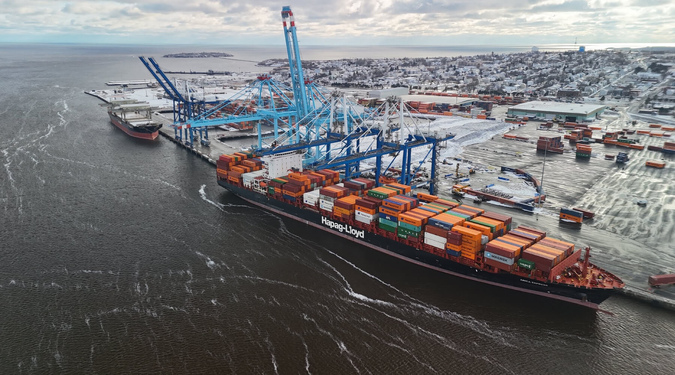
The Port of Saint John, for one, has been experiencing a renaissance that positions us well regardless of changing trade dynamics.
The recent announcement by Americold – the second largest provider of cold storage space globally – to build a massive cold storage facility in our city represents a transformative development. This infrastructure will enable the continuous cold chain required for food products from ship to rail to final delivery points, a capability we've lacked until now.
Creating Jobs
This development complements investments in rail service partnerships with Canadian Pacific Kansas City Rail and NB Southern Rail. Most importantly, these initiatives are creating more jobs at the port than we've seen in generations – perhaps the highest employment levels in 50 years.
In times of global uncertainty, focusing on what we can control becomes paramount. Major infrastructure projects like the Irving mill expansion provide not only immediate construction jobs but also maintain long-term employment while keeping our facilities competitive on the world stage.
At the provincial level, we have the opportunity to follow Nova Scotia's lead in eliminating interprovincial trade barriers. While this opens our markets to products from other provinces, it equally allows New Brunswick businesses to sell into those markets, keeping money flowing within our Canadian economy as we build a stronger east-to-west economic corridor.
Global Perspective
The timing of an American trade war couldn't be more challenging. According to a new analysis by the Canadian Chamber of Commerce's Business Data Lab, Saint John ranks as the most exposed city in Canada to these tariffs.
This vulnerability stems from our high export intensity to the U.S. market and our significant energy exports – particularly through the Irving Oil Refinery, which processes over 320,000 barrels of crude daily with more than 80 per cent exported south of the border. At this moment, a 10 percent tariff still applies to Canadian energy. Our seafood and forestry products are also directly impacted by these trade barriers.
Historically, Saint John has maintained a global perspective, with shipping lines based here known worldwide. This moment invites us to renew that outward-looking economic approach. While the U.S. market has been our natural and convenient trading partner, we have established free trade agreements with the European Union and Asian-Pacific countries that remain underutilized a decade after implementation.
We can also recognize the value of work that focuses on the local or Canadian markets. Hands-on trades ranging from mechanics to barbering, professions from law to communications, represent skills and services that focus on small and domestic markets.
Opportunity for Growth
Similarly, advanced manufacturing represents an opportunity for growth. While we have some world-class firms in this province in food production, forestry value-added products, and oil and gas, we could benefit from producing more consumer goods locally, especially if protectionism becomes the new normal.
For businesses currently engaged with U.S. partners, proactive contract management can help navigate this new reality. Consider implementing tariff escalation provisions in agreements to address these trade barriers. With tariffs now jumping from zero to 25 percent overnight, companies moving goods across borders face immediate disruption to their supply chains.
As we move forward, a strategic approach can prioritize three markets in this order: local, other international markets, and the U.S. market.
Saint John has faced challenges before and emerged stronger through innovation and resilience. By focusing on infrastructure development, market diversification, and building sectors resistant to external pressures, we can continue to thrive. The time to act decisively on these opportunities is now.
Mel Norton is a partner at Lawson Creamer. He can be reached at mnorton@lawsoncreamer.com.