

Why My Best Legal Training Happened Outside a Law Firm
There is a particular clarity that comes with making a decision later in life.
When you are young, choices can feel arbitrary: you pick a direction, commit to it, and figure out what it means as you go.
When you are older, you know what you are choosing. You have context. You have made enough decisions to understand what a good one feels like, and you take the bad ones more seriously.
When Lawson Creamer announced that Chris Isnor and I had been named partners, I was struck by two things. The first was the warmth of the response – colleagues, clients, people I had not spoken to in years. The second was something quieter – the particular gratitude that comes from knowing you made the right call.
I came back to private practice with the conviction that unconventional experience has real value in this work. My Lawson Creamer partners saw it the same way – and that alignment is what makes this announcement particularly meaningful to me.
A Profession I Grew Up With
Law has always been part of my family. My grandfather was a judge, two of my uncles practised, several of my male cousins went into law, and my brother is a lawyer too. As of now, I’m the only female descendant to have chosen this path but that will likely change in the next few years as my cousins daughters graduate from their first degrees.
When I was young, I would sit in the kitchen and watch court artists' renderings of my grandfather appear on the evening news, not fully understanding the cases being discussed but knowing they mattered – to the family, to the province, to anyone watching.
That is a particular way to grow up with a profession. You absorb its weight before you understand its substance. Well before I arrived at law school, I had a lot of experience listening to lawyers think out loud.
The desk I work at was my grandfather's before his appointment to the Bench, and my uncle's after that. When my uncle retired at 82, it came to me. I am the third generation of my family to sit at it and serve clients – and I am aware of that every single day.
There is a particular kind of law firm that understands why a desk is more than a desk.
Lawson Creamer is that kind of firm – one built on family, grounded in 50 years of tradition, and genuinely connected to its community, its history, and its people. I did not have to look far to feel at home.
The Years Between
Years ago, I made the decision to leave private practice and join the world of the clients I had worked for. During those years, I held several roles in large-scale enterprise sales, strategic consulting, advocacy work before returning to private practice.
That path was not a detour from law. Those years made me a better lawyer. I have no doubt about that.
The work I did outside a law firm gave me a different perspective on how the law affects real organizations, real businesses, real people. It sharpened my ability to understand what clients are actually trying to achieve – and to give practical advice that reflects that.
Why Lawson Creamer
When the conversation with Lawson Creamer first arose, I was returning to New Brunswick from Montréal and thinking seriously about what came next.
I had known the partners for 25 years. I knew the firm's reputation – not as something to take on faith, but because I had watched it, from a distance, for a long time.
Lawson Creamer is a firm that takes on complex, high-stakes litigation and goes head-to-head with much larger regional firms on equal footing. That reputation is earned, not inherited. For a lawyer who wanted to come back to private practice and do serious work from the first day, it mattered enormously.
It was also a firm where I knew I could trust the culture.
The work
Within months of joining the firm, I was engaged in fascinating and impactful cases that had me appearing before both the Court of King’s Bench and Court of Appeal. The cases since have only grown in scope.
The most significant involved representing a private landowner last year as an intervener in JD Irving Limited et al. v. Wolastoqey Nation, 2025 NBCA 129 – the largest Aboriginal title claim in the province's history, encompassing more than 60 per cent of New Brunswick's land mass.
My client was concerned about the impact of a declaration of aboriginal title on his lands, a concern that was validated with the August 2025 declaration of aboriginal title over private lands in Cowichan Tribes v. Canada (Attorney General), 2025 BCSC 1490 had immediate consequences for private landowners.
On behalf of the private landowner, I argued before the Court of Appeal that fee simple title – the form of title held by most landowners in New Brunswick – is fundamentally incompatible with aboriginal title, both of which confer extensive rights of exclusive occupation and use of land.
The appeal court ultimately found that a declaration of aboriginal title could not issue over private lands but that a court could make a finding of aboriginal title which could ground a claim for compensation.
It is a legal nuance that makes all the difference for private landowners in New Brunswick, most of whom were not aware of the risk and uncertainty that a declaration of aboriginal title posed to their title. The application for leave to appeal to the Supreme Court of Canada was recently dismissed, making our Court of Appeal's decision the status quo for now.
This is the kind of work Lawson Creamer attracts. And it’s why I chose this firm to relaunch my practice.
What Partnership Means
I am now part of conversations about the direction of this firm – how it grows, how it serves clients, where it goes as it approaches its 50th year.
I also find that I appreciate what I have in Christopher Isnor as a colleague in the partnership. We work closely together, share files where it makes sense, and have developed an easy working relationship built on mutual respect. That matters in a litigation practice. It is good for clients, and it makes the work better.
Partnership, for me, is not a destination. It is a particular kind of commitment – to the firm, to the clients, to the work, and to the colleagues who are building something here alongside you.
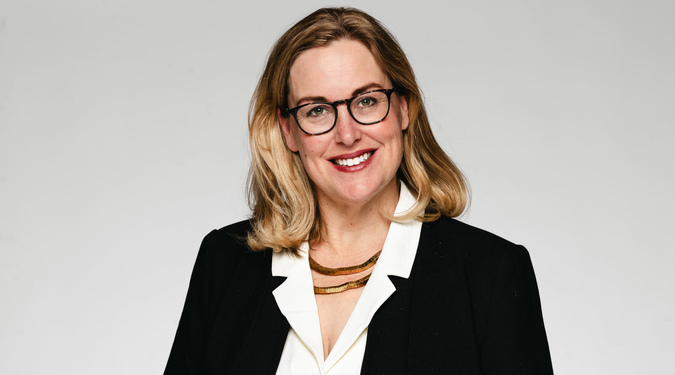
Mara Mallory is a partner at Lawson Creamer, practising civil litigation. She can be reached at mmallory@lawsoncreamer.com.